
SPONDYLOLISTHESIS
Proliance Orthopedic Associates


ABOUT THIS CONDITION
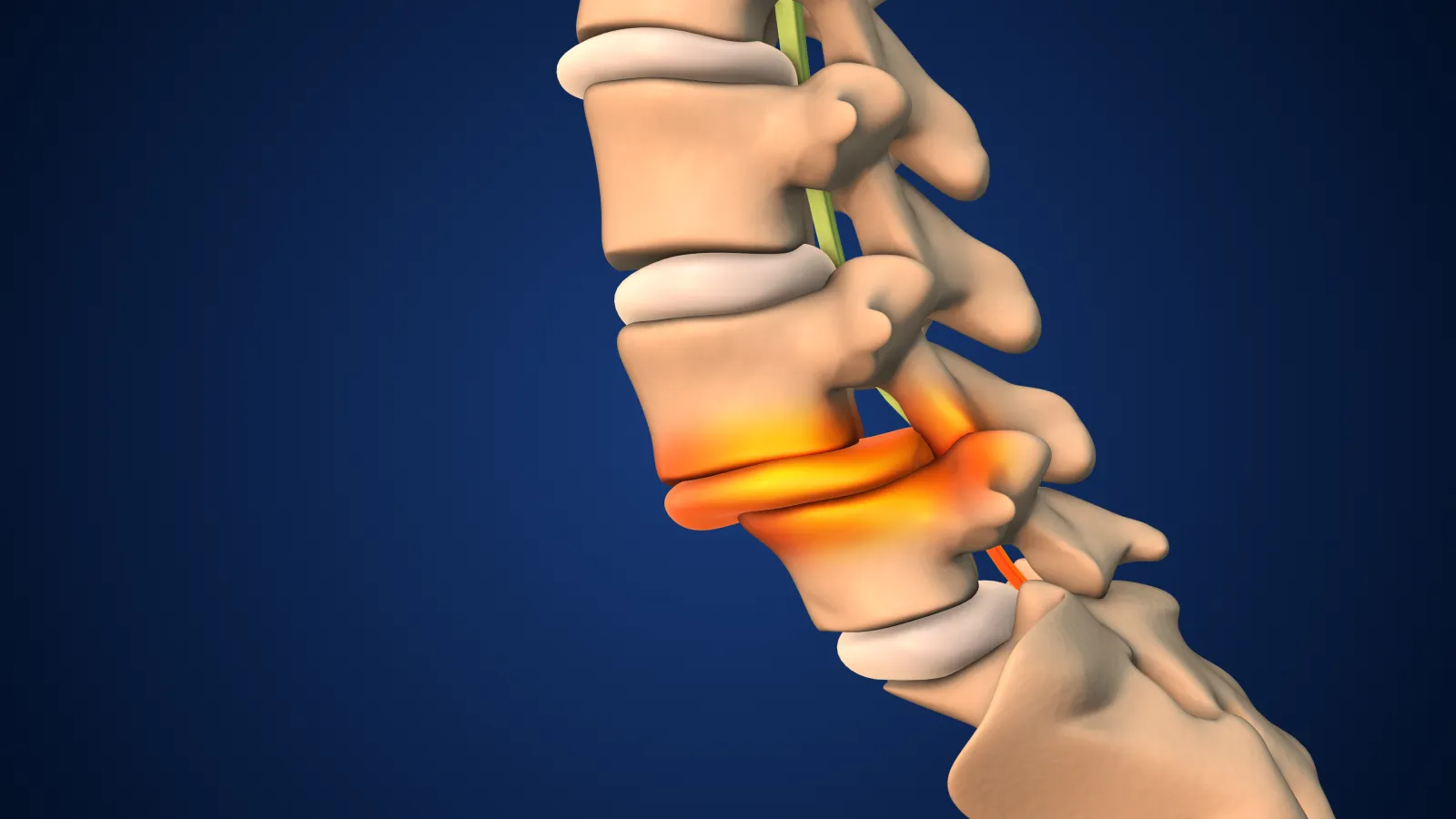
Spondylolisthesis is a condition in which one vertebra slips forward over the vertebra below it. The amount of slippage is graded on a scale from Grade I (mild, less than 25% slippage) to Grade IV (severe, 75 to 100% slippage). The condition most commonly occurs in the lumbar spine, particularly at the L4-L5 or L5-S1 levels.
There are several types of spondylolisthesis. Degenerative spondylolisthesis is the most common form in adults and results from age-related wear of the facet joints and discs, allowing one vertebra to gradually slip forward. It is most common in women over 50 and at the L4-L5 level. Isthmic spondylolisthesis results from a stress fracture (spondylolysis) in a small bridge of bone in the vertebra, most commonly developing during adolescence in athletes who perform repetitive extension and rotation — gymnasts, football linemen, wrestlers, and weightlifters.
Patients with spondylolisthesis may experience lower back pain that worsens with activity and extension (leaning backward), stiffness, hamstring tightness, and in some cases radiating leg pain from nerve compression. Some patients have minimal symptoms despite significant slippage, while others experience significant pain with only mild slippage.
TREATMENT
Most patients with spondylolisthesis are successfully managed without surgery. Dr. Daniel Oh guides patients through a conservative treatment program at our Renton and Covington locations, including physical therapy focused on core stabilization, hamstring stretching, and activity modification. Anti-inflammatory medications help manage pain, and epidural steroid injections may be used to treat associated nerve compression. A lumbar brace can provide additional support during symptomatic flares.
Surgery is considered when conservative treatment has not provided adequate relief after six or more months, when the slip is progressing, or when there is significant nerve compression causing leg pain, numbness, or weakness. Dr. Chris Howe and Dr. Jason Thompson perform spinal fusion to stabilize the slipped vertebra and decompress any pinched nerves. The procedure involves realigning the vertebra when possible, placing bone graft in the disc space, and securing the vertebrae with rods and screws. Surgery is performed at Proliance Surgery Center at Valley in Renton under general anesthesia and typically requires a one to three night hospital stay.
RECOVERY
FREQUENTLY ASKED QUESTIONS
Q What causes spondylolisthesis?
Q Can spondylolisthesis get worse over time?
Q Does spondylolisthesis always require surgery?
No. Most patients with low-grade spondylolisthesis are successfully managed with physical therapy, medications, and injections. Surgery is reserved for cases that do not respond to conservative treatment or that involve significant nerve compression.
Q Is spondylolisthesis common in young athletes?
Q How effective is surgery for spondylolisthesis?
Spinal fusion for spondylolisthesis has a high success rate. Most patients experience significant improvement in both back pain and leg symptoms. Commitment to rehabilitation and avoiding tobacco use are important factors in achieving a successful outcome.
Q Will I be able to return to sports after surgery?
Most patients return to a full, active life after recovery from fusion surgery. High-impact sports and heavy lifting may be modified, and your surgeon will provide individualized activity guidelines based on your fusion level and overall spine health.