
Southeast Asia Journey, Part 7: Advancing Anterior Hip Navigation in Indore
Written by: Dr. Timothy Alton
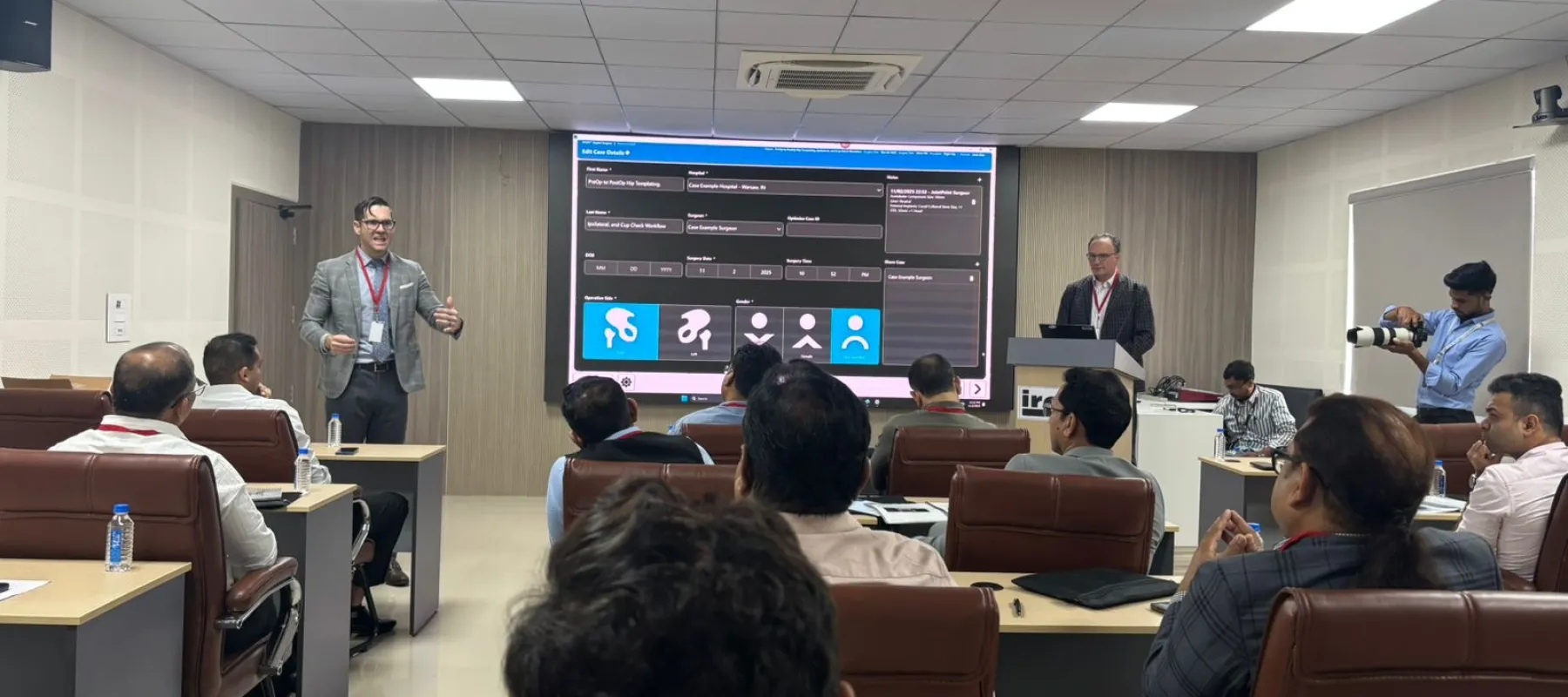
My time in Indore continued with another remarkable opportunity—teaching VELYS hip navigation to some of the top key opinion leaders in India. The country is in the midst of its anterior approach journey, and surgeons are increasingly recognizing the benefits of this soft-tissue-friendly technique. For many in attendance, this was their first exposure to the VELYS hip navigation system, and the level of interest and enthusiasm was inspiring.
We gathered the top fifteen orthopedic thought leaders from across India, including the current president of the Indian Orthopedic Association, all of whom traveled to Indore specifically for this session. We began with a lecture and a deep dive into the navigation platform, supported by one of the most experienced educators from the DePuy team. Together, we dissected how the system works, how it integrates seamlessly into the anterior approach workflow, and how it can help surgeons refine cup position, leg length, and offset with exceptional precision.
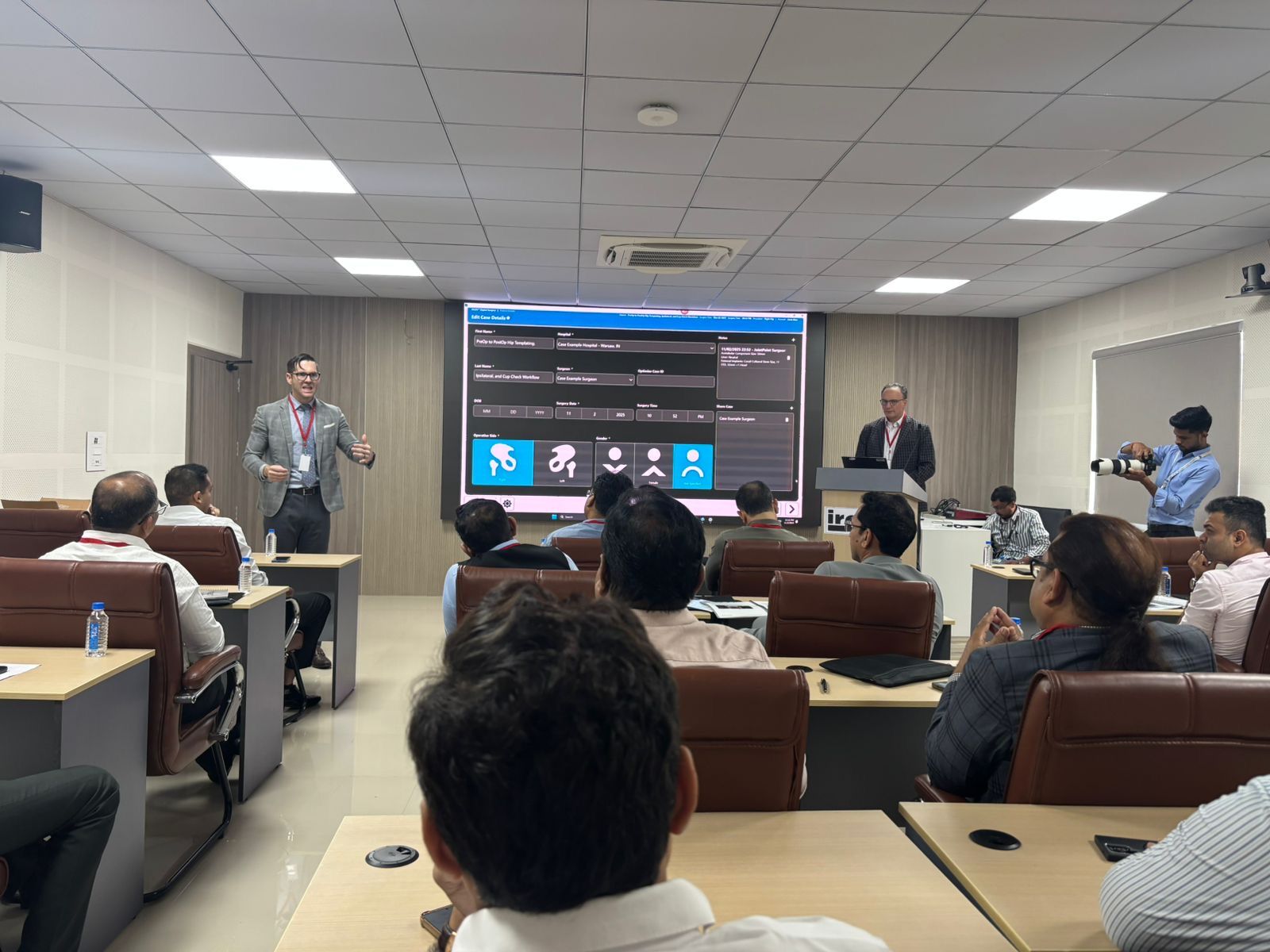
One of the advantages of VELYS hip navigation is that it does not require a CT scan, making it efficient, accessible, and well-suited to high-volume anterior approach practices. I shared how we have used the technology in the United States to achieve highly consistent outcomes, minimize leg length inequality, and virtually eliminate unexpected cup positioning. The ability to pair fluoroscopy with navigation in a streamlined way has been a significant advantage in our practice.
During the session, we discussed detailed strategies for optimizing workflow and improving efficiency with the navigation system. These included tips for patient positioning, fluoroscopic targeting, and real-time decision-making during cup placement. The surgeons asked thoughtful and technical questions, demonstrating not only enthusiasm but a strong desire to adopt tools that elevate patient safety and outcome reliability.
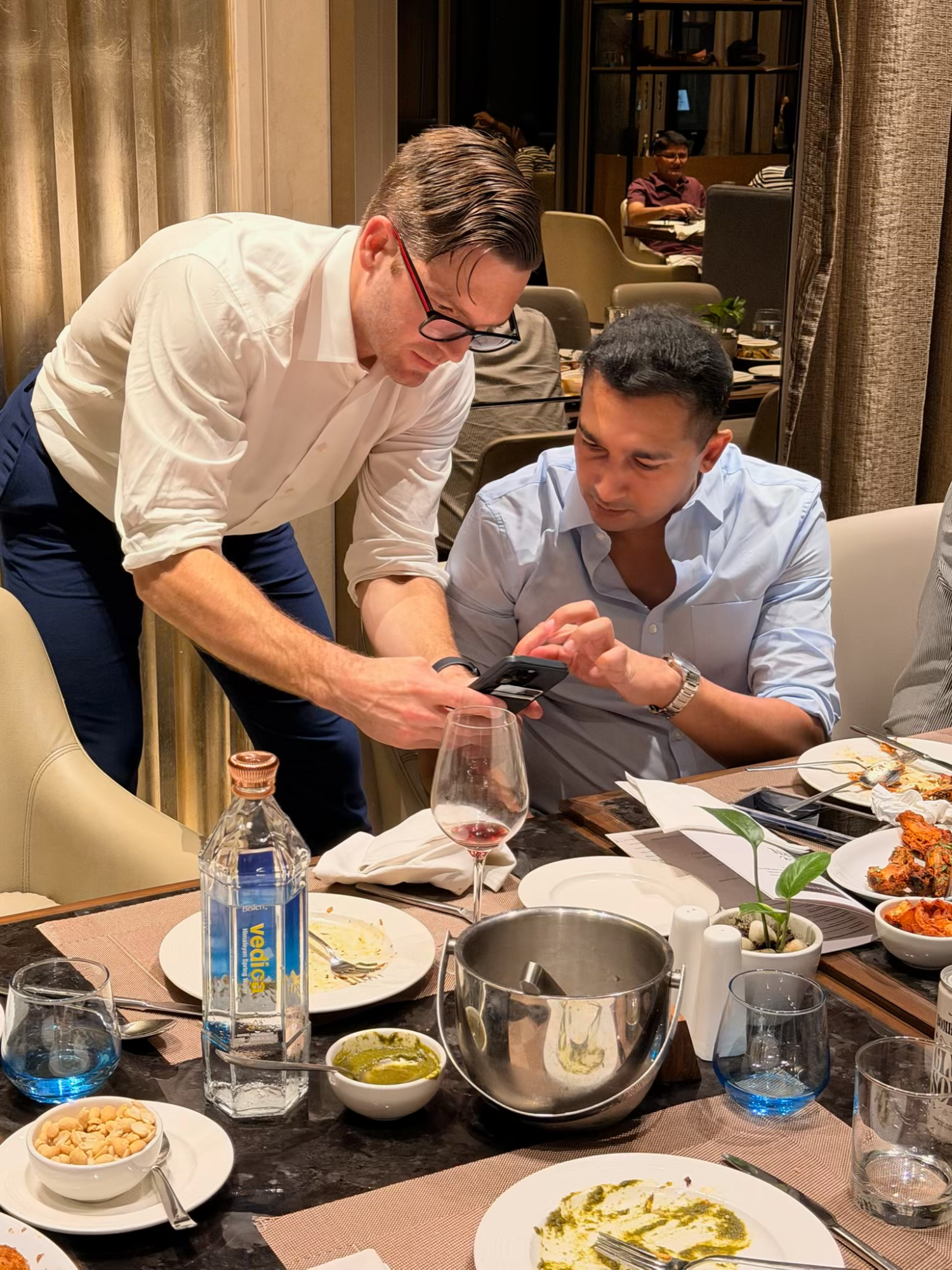
The experience was energizing and rewarding. Teaching anterior approach tips while showcasing how navigation can enhance accuracy allowed for productive discussion and genuine excitement among the attendees. Seeing India's orthopedic leaders embrace this technology and envision how it can transform their approach to hip replacement was a highlight of the trip and an important step in the global adoption of advanced digital tools in joint replacement.