
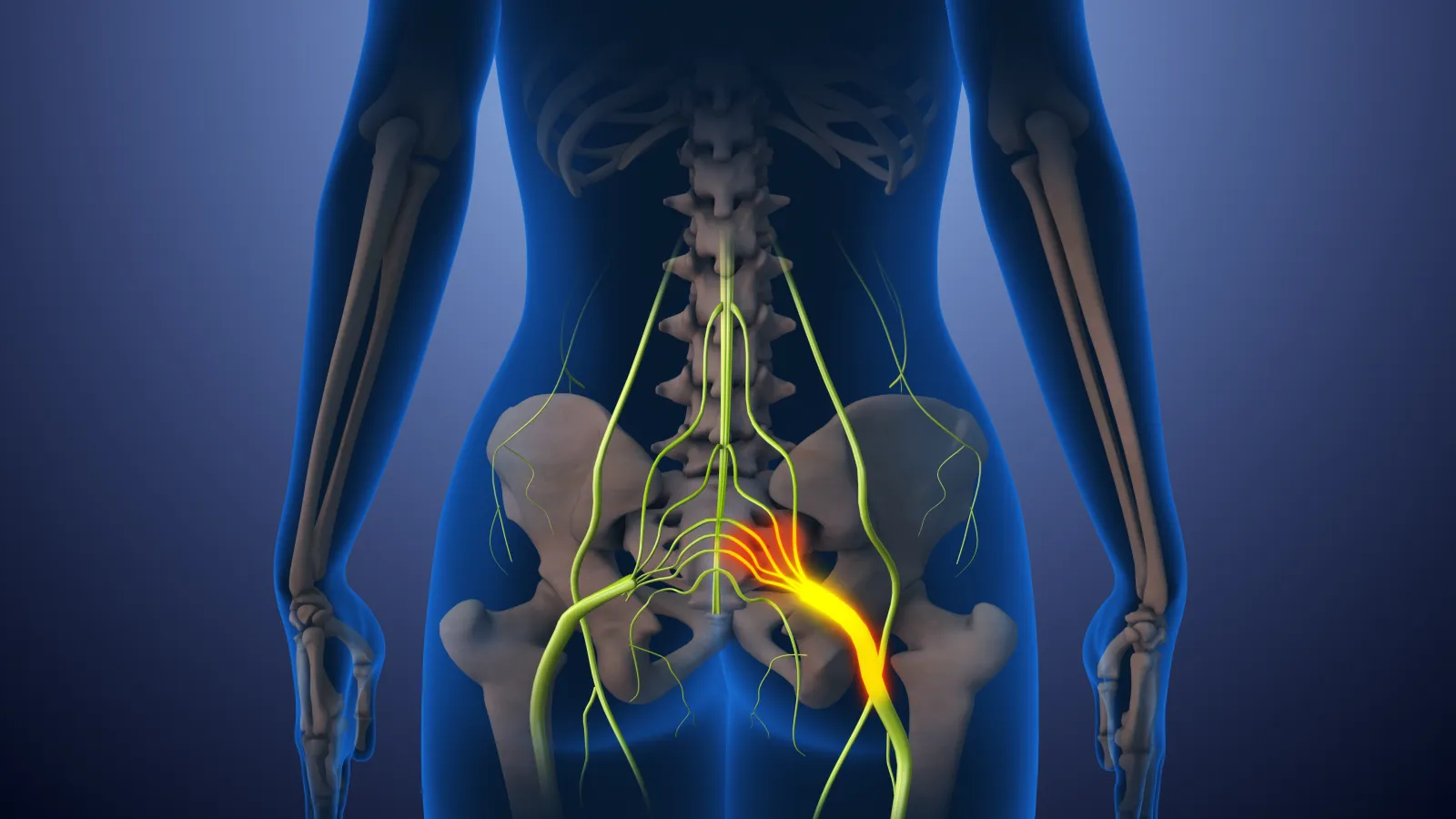
SCIATICA AND RADICULOPATHY
Proliance Orthopedic Associates


ABOUT THIS CONDITION
Sciatica is a term used to describe pain that radiates along the path of the sciatic nerve — from the lower back through the buttock and down the back of the leg. It is caused by compression or irritation of a nerve root in the lumbar spine, most commonly from a herniated disc, bone spur, or spinal stenosis. The medical term for this type of nerve pain is radiculopathy.
Radiculopathy can occur in the cervical spine as well, causing pain that radiates from the neck into the shoulder, arm, and hand. Regardless of the location, the underlying mechanism is the same — an inflamed or compressed nerve root sending pain signals along the path of the nerve.
The hallmark symptom of sciatica is sharp, shooting, or burning pain that travels from the lower back down the buttock and into the leg, sometimes reaching the foot. The pain is typically worse on one side and may be accompanied by numbness, tingling, or weakness in the affected leg. Sitting, coughing, and sneezing often worsen the pain. Cervical radiculopathy produces similar symptoms in the arm — pain, numbness, and tingling that travel from the neck into the shoulder, arm, and fingers.
Sciatica and radiculopathy are extremely common, affecting a significant percentage of the adult population at some point in their lives. The good news is that approximately 90% of patients improve with conservative treatment, and most episodes resolve within six to twelve weeks.
TREATMENT
Conservative treatment is the first-line approach for sciatica and pinched nerve pain, and it is effective for the vast majority of patients. Dr. Daniel Oh develops individualized non-surgical treatment plans for sciatica and radiculopathy at our Renton and Covington locations, addressing both pain relief and functional recovery.
Anti-inflammatory medications, short-term use of oral steroids, and muscle relaxants help manage acute symptoms. Physical therapy is essential and focuses on core strengthening, nerve gliding exercises, and correction of posture and body mechanics. Staying active and continuing to walk is strongly encouraged — bed rest is not recommended and can delay recovery.
Epidural steroid injections are a highly effective tool for patients with moderate to severe symptoms. By delivering anti-inflammatory medication directly to the area of nerve compression, these injections can provide significant relief lasting weeks to months and allow patients to participate more effectively in physical therapy.
When conservative treatment has failed after six to twelve weeks, when there is progressive neurological weakness, or in rare emergency situations such as cauda equina syndrome, Dr. Chris Howe and Dr. Jason Thompson discuss surgical options with patients. The most common procedure is a microdiscectomy for lumbar radiculopathy, or an ACDF or cervical disc replacement for cervical radiculopathy. These procedures are performed at Proliance Surgery Center at Valley in Renton.
FREQUENTLY ASKED QUESTIONS
Q Will my sciatica go away on its own?
Most cases of sciatica improve significantly within six to twelve weeks with conservative treatment. Approximately 90% of patients recover without surgery. However, treatment helps speed recovery and prevent the condition from becoming chronic.
Q What is causing my sciatica?
The most common cause is a herniated disc pressing on a nerve root in the lower back. Other causes include bone spurs, spinal stenosis, and spondylolisthesis. Your doctor will determine the specific cause through examination and, if needed, imaging.
Q Should I rest or stay active with sciatica?
Staying active is important. Walking and gentle movement help reduce inflammation and prevent deconditioning. Prolonged bed rest is not recommended and can actually make symptoms worse. Avoid activities that significantly worsen your pain.
Q How effective are epidural steroid injections for sciatica?
Epidural injections provide significant relief for many patients with sciatica. They work by reducing inflammation around the compressed nerve. Relief can last weeks to months and allows patients to participate more effectively in physical therapy.
Q When should I be concerned about my symptoms?
Q What is the difference between sciatica and a pulled muscle?
Q Can sciatica affect both legs?
Q How can I prevent sciatica from recurring?
Q Where can I get sciatica treatment near Renton or Covington?
Dr. Daniel Oh provides non-surgical sciatica and pinched nerve treatment at our Renton and Covington clinics, including epidural steroid injections and individualized therapy programs. For patients who require surgery, Dr. Chris Howe and Dr. Jason Thompson perform procedures at Proliance Surgery Center at Valley in Renton.