
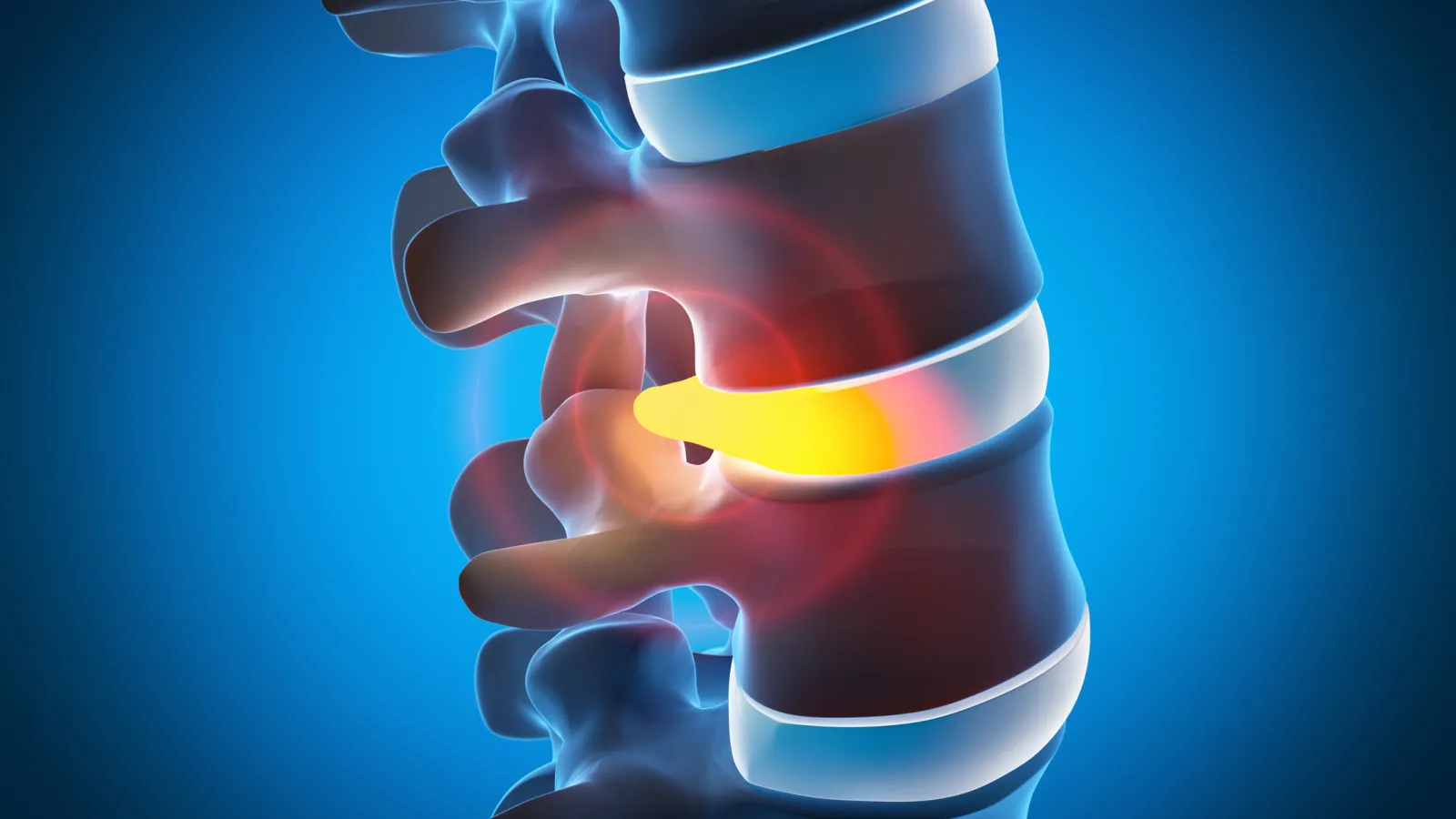
HERNIATED DISC (CERVICAL AND LUMBAR)
Proliance Orthopedic Associates


ABOUT THIS CONDITION
A herniated disc occurs when the soft, gel-like center (nucleus pulposus) of a spinal disc pushes through a tear in the tough outer layer (annulus fibrosus), putting pressure on nearby spinal nerves or the spinal cord. This can happen in the cervical spine (neck) or the lumbar spine (lower back) and is one of the most common causes of neck, back, arm, and leg pain.
Cervical disc herniations cause neck pain that often radiates into the shoulder, arm, and hand. Patients may experience numbness, tingling, pain, or weakness in the arm or fingers. Lumbar disc herniations cause lower back pain that typically radiates down the buttock and leg — the classic pattern known as sciatica. Numbness, tingling, pain, and weakness in the leg or foot may accompany the pain.
Herniated discs are most common in adults between 35 and 55 years of age. They can result from a single injury such as heavy lifting with poor form or a sudden twisting motion, but more often they develop gradually as the disc degenerates with age. Risk factors include repetitive bending, lifting, prolonged sitting, excess weight, and smoking. While herniated discs can cause significant pain and disability, the good news is that most patients see improvement with herniated disc treatment within six to twelve weeks without surgery. If significant improvement does not occur during this time then surgery becomes a viable, predictable option.
TREATMENT
Many herniated discs respond well to non-surgical care. Dr. Daniel Oh, our interventional pain management specialist, works closely with patients to develop an individualized treatment plan. Conservative treatment includes anti-inflammatory medications, a short period of activity modification, and a structured physical therapy program focused on core strengthening, flexibility, and proper body mechanics. Epidural steroid injections can provide significant pain relief by reducing inflammation around the compressed nerve, allowing patients to participate more effectively in therapy and helping determine whether the herniated disc may heal on its own.
Walking and gentle activity are encouraged — prolonged bed rest is not recommended and can actually delay recovery. Many patients experience meaningful improvement within four to six weeks and full resolution within three months.
When conservative treatment fails to provide adequate relief after six to twelve weeks, or when there is progressive neurological weakness, Dr. Chris Howe and Dr. Jason Thompson may recommend surgery. The most common procedure for a lumbar herniated disc is a microdiscectomy, a minimally invasive outpatient procedure that removes the herniated disc fragment and allows most patients to go home the same day. For cervical herniations, an anterior cervical discectomy and fusion (ACDF) or cervical disc replacement may be performed, also typically as an outpatient procedure. Both are performed at Proliance Surgery Center at Valley in Renton.
RECOVERY
FREQUENTLY ASKED QUESTIONS
Q Will my herniated disc heal without surgery?
Many herniated discs improve with conservative treatment within six to twelve weeks, but certainly not all. In some cases the body gradually reabsorbs the herniated disc material and inflammation subsides with treatment. Surgery is reserved for patients who do not improve or who develop significant weakness.
Q What is the difference between a bulging disc and a herniated disc?
Q Do I need an MRI?
An MRI is the best imaging study for visualizing a herniated disc and assessing nerve compression. It is typically ordered when symptoms are severe, not improving with initial treatment, or when surgery is being considered. Many patients improve before an MRI is needed.
Q Should I rest or stay active?
Staying active is strongly encouraged. Walking and gentle movement help promote healing and prevent deconditioning. Prolonged bed rest is not recommended and can actually slow recovery. Your doctor and physical therapist will guide you on appropriate activity levels.
Q What is an epidural steroid injection and will it help?
An epidural steroid injection delivers anti-inflammatory medication directly to the area around the compressed nerve. It can provide significant pain relief lasting weeks to months and allows you to participate more effectively in physical therapy. Dr. Oh performs these injections at our Renton and Covington locations as part of a comprehensive non-surgical treatment plan.
Q When is surgery necessary for a herniated disc?
Q Can a herniated disc come back?
Recurrence is possible, occurring in approximately 5 to 10% of patients after microdiscectomy. Maintaining core strength, using proper lifting techniques, and avoiding excessive bending and twisting help reduce the risk.
Q How long will I be out of work?
For non-surgical treatment, most patients continue working with modifications. After microdiscectomy, return to desk work is typically one to two weeks, with physical labor taking four to six weeks. After cervical surgery, return to desk work is usually two to four weeks.