
DEGENERATIVE DISC DISEASE
Proliance Orthopedic Associates


ABOUT THIS CONDITION
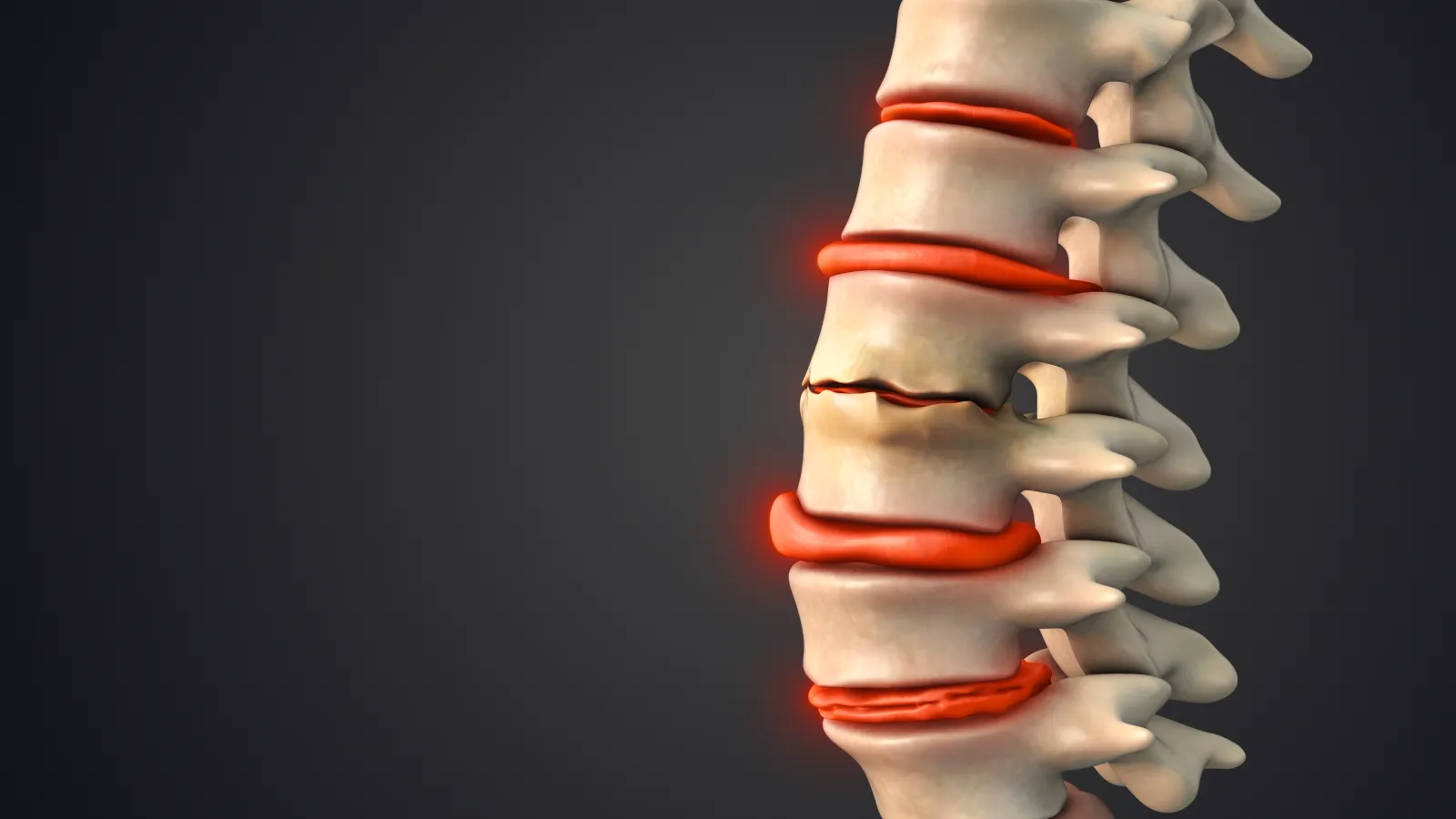
Degenerative disc disease is not actually a disease — it is a term used to describe the natural, age-related changes that occur in the spinal discs over time. Every person's discs lose hydration, become thinner, and develop small tears as they age. For most people, these changes cause no significant symptoms. However, in some individuals, disc degeneration leads to chronic neck or back pain that can significantly impact quality of life.
The spinal discs act as shock absorbers between the vertebrae, providing cushioning and allowing the spine to flex and bend. As the discs degenerate, they lose height and their ability to absorb shock. This can lead to pain from the disc itself, as well as secondary problems such as bone spur formation, facet joint arthritis, and spinal stenosis.
Patients with symptomatic degenerative disc disease typically experience chronic, low- grade pain in the neck or lower back that is worse with certain activities — particularly prolonged sitting, bending, lifting, or twisting — and improves with movement and position changes. Pain may flare up periodically and then improve. Some patients also develop radiating arm or leg pain if the degeneration causes nerve compression.
Degenerative disc disease can affect anyone as they age, though it is more common in people who smoke, are overweight, do heavy physical work, or have had prior spine injuries. It is important to understand that disc degeneration on an MRI is extremely common in people with no symptoms at all — findings on imaging do not always correlate with pain.
TREATMENT
The vast majority of patients with degenerative disc disease are managed non- surgically with excellent results. Dr. Daniel Oh specializes in developing comprehensive, individualized treatment plans for patients with chronic neck and back pain seen at our Renton and Covington locations.
The foundation of treatment is physical therapy and exercise. A structured program focused on core strengthening, flexibility, and aerobic conditioning helps support the spine, reduce pain, and improve function. Anti-inflammatory medications (both oral and topical) manage pain and inflammation. Weight management, good posture, ergonomic adjustments, and smoking cessation are all important components of long-term management.
Epidural steroid injections or facet joint injections can provide targeted pain relief when specific pain generators are identified. These injections serve both a therapeutic and diagnostic role, helping to confirm the source of pain and provide a window of relief that allows participation in therapy.
Surgery is reserved for the small minority of patients whose pain is severe, disabling, and has not responded to at least six months of dedicated conservative treatment. Surgical options include lumbar fusion or cervical disc replacement, which preserves motion at the treated level. When surgery is indicated, Dr. Chris Howe and Dr. Jason Thompson determine the best approach based on the specific condition and are available at our Renton and Covington locations. Procedures are performed at Proliance Surgery Center at Valley in Renton.
FREQUENTLY ASKED QUESTIONS
Q Is degenerative disc disease actually a disease?
Q Will my degenerative disc disease get worse over time?
Disc degeneration is a gradual, ongoing process, but symptoms do not necessarily worsen. Many patients find that their pain stabilizes or even improves with consistent management including exercise, weight control, and good body mechanics.
Q Does a degenerated disc on MRI mean I need surgery?
Q What is the best exercise for degenerative disc disease?
Core strengthening exercises, walking, swimming, and cycling are all excellent. The goal is to build the muscles that support the spine while maintaining flexibility and cardiovascular fitness. Your physical therapist will design a program tailored to your needs.
Q Can weight loss help my back pain?
Yes. Excess weight increases the load on the spinal discs and joints. Even modest weight loss can significantly reduce back pain and improve function.
Q Are epidural injections helpful for degenerative disc disease?
Injections can be very helpful for specific pain patterns, particularly when there is nerve compression or facet joint inflammation. Dr. Oh uses targeted injections both to provide relief and to identify the specific source of pain, which guides treatment decisions.
Q Will I eventually need surgery?
Q How important is it to stop smoking?
Extremely important. Smoking accelerates disc degeneration, impairs healing, and is associated with worse outcomes for both conservative and surgical treatment. Quitting smoking is one of the most impactful things you can do for your spine health.
Q Where can I see a back pain doctor in Renton or Covington?
Dr. Daniel Oh is a back pain doctor in Renton and Covington who sees patients with degenerative disc disease and chronic back pain at Proliance Orthopedic Associates. When surgery is needed, Dr. Chris Howe and Dr. Jason Thompson perform procedures at Proliance Surgery Center at Valley in Renton.